


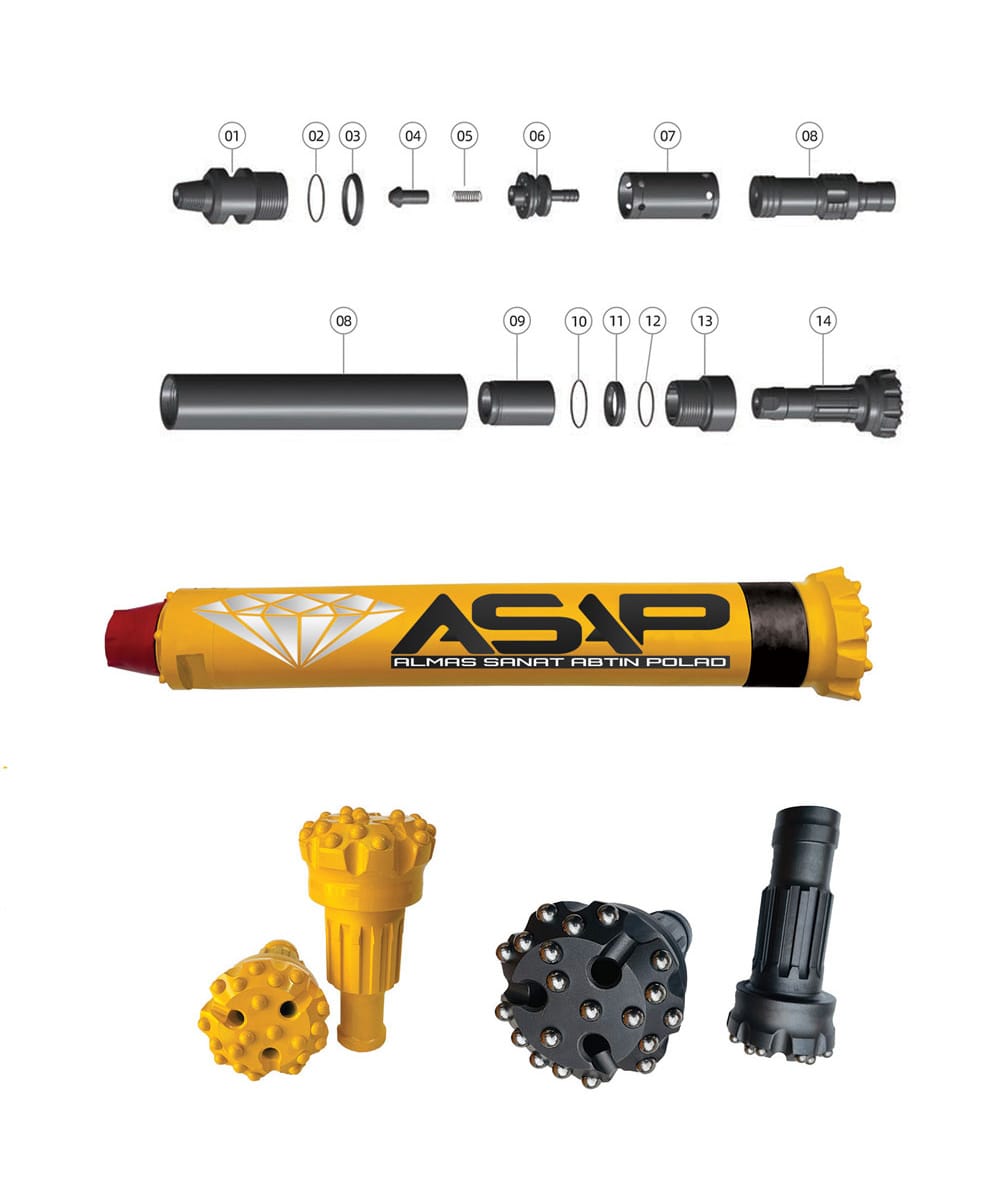
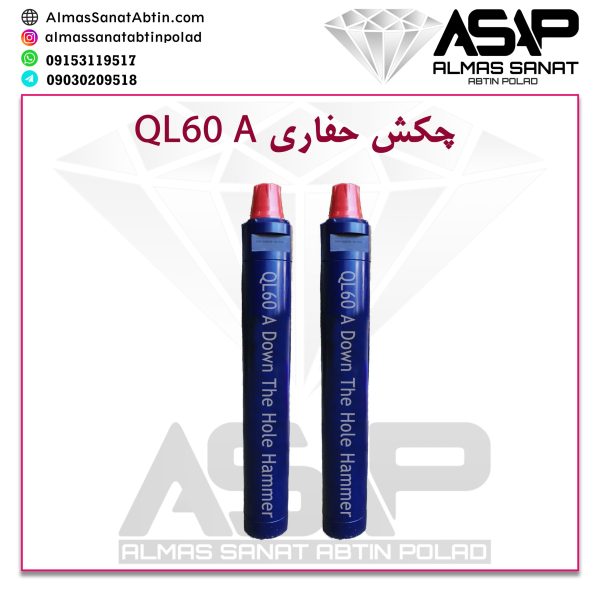
3.5-Inch DTH Drilling Hammer – Low-Pressure & High-Pressure (90 mm Drill Bit)
The 3.5-inch DTH drilling hammer is a suitable choice for drilling hard and dense rock formations in mining operations, water-well drilling, and civil engineering projects. Selecting the right drill bit, drill rod, compressor, and drilling rig to match the hammer model plays an important role in system performance and overall drilling efficiency. For technical specifications, compatible drill-bit sizes, and the latest price of the 3.5-inch DTH hammer, contact the specialists at Almas Sanat Abtin Poulad.
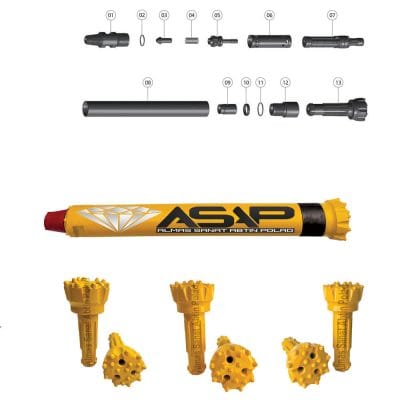
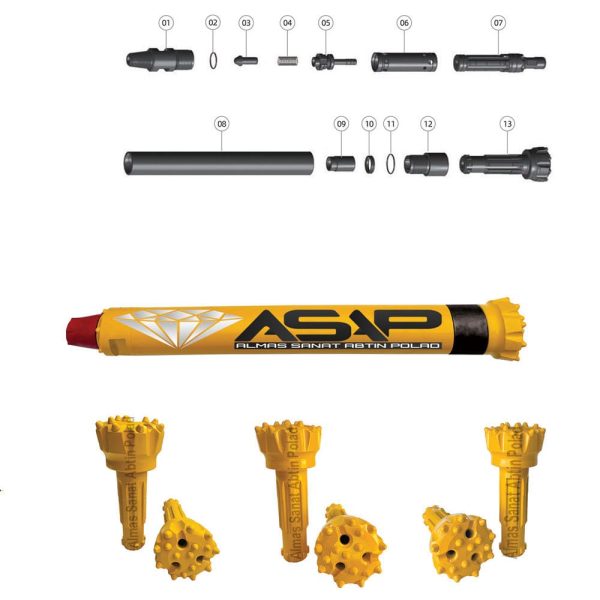
The 3.5-inch DTH drilling hammer is a down-the-hole percussion drilling tool designed for hard and compact rock formations. It is widely used in mining, civil engineering, road construction, water-well drilling, and dimension-stone extraction. In a DTH system, the impact mechanism is positioned at the bottom of the drill string, close to the bit. This minimizes energy loss during transmission and delivers the impact force more directly to the rock, enabling efficient drilling in hard formations.
The DTH hammer should be selected based on the borehole diameter, rock type, compressor air pressure and flow rate, drilling rig type, and drill-bit shank configuration.
Technical Specifications of the 3.5-Inch DTH Drilling Hammer
| Hammer Type | DTH (Down-The-Hole) |
| Nominal Size | 3.5 inches or 90 mm hammer size |
| Application | Drilling in hard and semi-hard rock formations |
| Drilling System | Down-The-Hole (DTH) percussion drilling |
| Bit Type | DTH Bit matched to the hammer shank |
| Common Drill Bit Diameter | Approximately 90–105 mm, depending on the model |
| Power Source | Compressed air supplied by the compressor |
| Applications | Mining, water-well drilling, stone quarrying, and civil engineering projects |
Note: The drill-bit diameter range and operating pressure cannot be determined solely from the term “3.5-inch.” For accurate selection, the specific hammer model or shank configuration must be checked.
What Drill Bit Size Is Suitable for a 90 mm DTH Hammer?
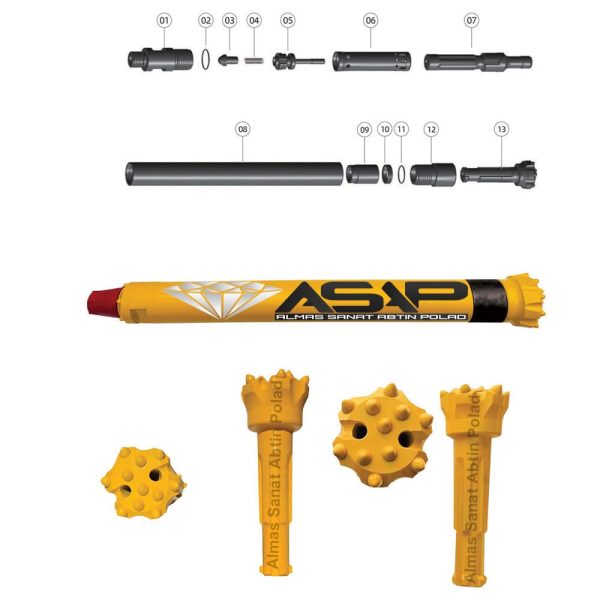
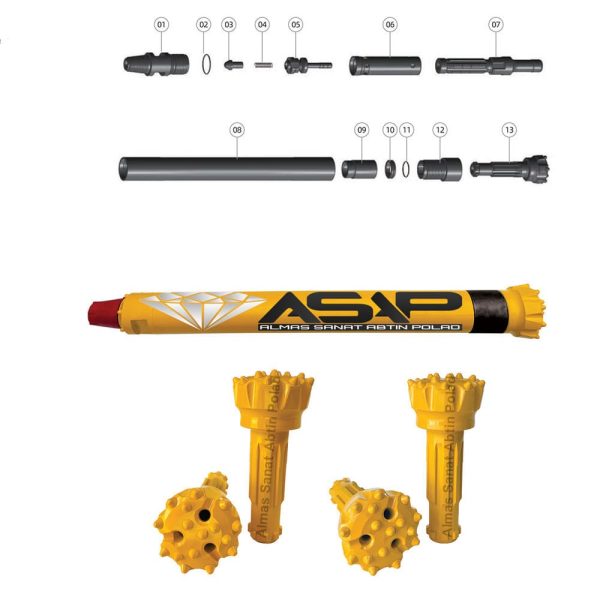
One of the most important considerations when purchasing a DTH hammer is ensuring that the drill-bit shank is compatible with the hammer. Many hammers in the 3.5-inch class can be used with drill bits in the approximate range of 90, 95, 100, and 105 mm. However, the exact compatible bit diameter depends on the hammer model and shank type.
Therefore, when ordering a drill bit, specifying only the diameter is not sufficient. The hammer model or the drill-bit shank type must also be provided.
Common Size Examples
- 90 mm DTH Drill Bit
- 95 mm DTH Drill Bit
- 100 mm DTH Drill Bit
- 105 mm DTH Drill Bit
If other diameters are required, we can review and recommend a suitable DTH drill bit based on the hammer model and the drilling conditions of the project.
Which Types of Mines Are Suitable for a 3.5-Inch DTH Drilling Hammer?
This hammer is well suited to projects requiring percussive drilling in dense and hard rock formations. Its main applications include:
- Iron Ore Mines
- Copper Mines
- Lead and Zinc Mines
- Gold Mines
- Mining Exploration Sites and Projects
- Stone Quarries and Building Stone
- Water-Well Drilling
- Geotechnical and Civil Engineering Drilling
- Blasthole Drilling for Open-Pit Mining
- Road Construction and Infrastructure Drilling
The actual performance of the hammer depends on factors such as rock hardness and abrasiveness, borehole diameter, air pressure, compressor flow rate, and the condition of the drilling rig.
What Types of Rock Is a 3.5-Inch DTH Drill Bit Suitable For?
The DTH system generally offers greater advantages when drilling through hard and dense rock formations. This type of hammer can be used for drilling in rocks such as:
- Granite
- Basalt
- Quartzite
- Dense Limestone
- Igneous and Metamorphic Rocks
- Hard and Abrasive Mineral Rocks
For selecting the most suitable drill bit, factors such as rock abrasiveness, degree of fracturing, and rock breakage characteristics should be considered in addition to rock hardness.
Which Drilling Rigs Can a 3.5-Inch DTH Hammer Be Mounted On?
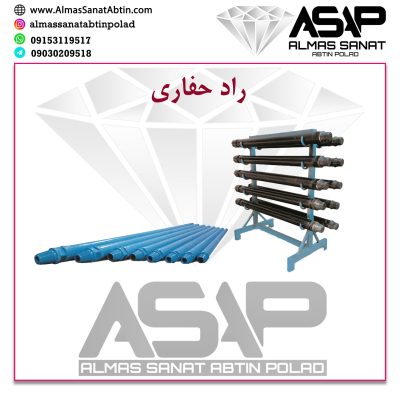
A 3.5-inch DTH drilling hammer can be used on drilling rigs equipped with a DTH drilling system, a compatible drill string, and sufficient compressed-air capacity to operate the hammer effectively.
Including:
- Mining Drilling Rigs
- Rotary-Percussion Drilling Rigs
- Water-Well Drilling Rigs
- Tracked and Wheeled Drilling Rigs
- Exploration Drilling Rigs
- Some drilling rigs can be equipped with a DTH system.
Compatibility between the hammer and the drilling rig should be checked in terms of threaded connection, drill rod, drill-bit shank, compressor air pressure, and air flow rate.
Performance of a 3.5-Inch DTH Drilling Hammer at Low and High Pressure
Compressor air pressure is one of the key factors affecting the performance of a mining drilling hammer. At lower pressure, the hammer generally operates with reduced impact intensity and drilling power, which may result in slower penetration in hard rock. However, for certain hammer models and drilling conditions, lower pressure may be suitable for lighter-duty applications.
At higher pressure, provided that the hammer is designed to operate within that pressure range, impact energy and drilling performance can increase, while cuttings removal may also become more effective.
An important point is that higher air pressure does not always mean better performance. Air pressure and flow rate must be adjusted according to the specific hammer’s technical specifications, drill-bit type, borehole diameter, and rock conditions. Operating above the recommended pressure range can increase wear on the hammer’s internal components and may damage the equipment. Therefore, selecting the correct operating pressure requires considering both the hammer specifications and the compressor’s actual air capacity.
Suitable Compressor for a 90 mm DTH Drilling Hammer
The compressor plays a critical role in DTH hammer performance. In addition to powering the hammer’s impact mechanism, compressed air is responsible for removing rock cuttings and effectively cleaning the borehole.
For this reason, the following factors should be considered when selecting a compressor:
- Required Operating Pressure of the Hammer
- Required Air Flow Rate
- Drilling Depth
- Borehole Diameter
- Rock Type and Ground Conditions
- Drill String Length
- Pressure Loss Along the Air Line
Selecting a compressor based on pressure alone is not sufficient; adequate air flow is also essential for proper hammer operation and efficient removal of rock cuttings.
Advantages of Using a 90 mm DTH Drilling Hammer
- Suitable for drilling in hard rock formations
- Delivers impact energy close to the bottom of the borehole
- Compatible with various DTH bits matched to the hammer shank
- Suitable for mining and civil engineering drilling
- Can be used for water-well drilling and exploration
- Performs effectively in medium-diameter boreholes
- Suitable for Use with a Wide Range of DTH Drilling Rigs
What Should You Consider When Buying a Mining DTH Hammer?
When selecting a suitable hammer, do not base your decision solely on price or the nominal 3.5-inch size. The following factors should be matched to the actual requirements of your project:
- Required borehole diameter
- Hammer model and drill-bit shank
- Rock type and hardness
- Compressor operating pressure
- Compressor air flow rate
- Drill rod type and diameter
- Drilling rig model
- Required drilling depth
- Rock abrasiveness
- Actual site and project conditions
If you have the drilling rig specifications, required borehole diameter, and rock type, the appropriate DTH hammer and drill bit can be selected more accurately.



Reviews
There are no reviews yet.